| Model | JJY-YLD138M-32 |
|---|---|
| Communication Parameter | TTL UART |
| Op. Voltage & Current | 2.8-3V/6mA |
| RF Pulse Current | 3V /400mA |
| Sampling Interval | 200ms/configurable |
| Accuracy / Beam Angle | 【±2mm】 /【 Beam Angle ±2.75】° |
| Range / Blind Zone | 【 0.05–10m】 / 【Radar Blind Zone 5cm】 |
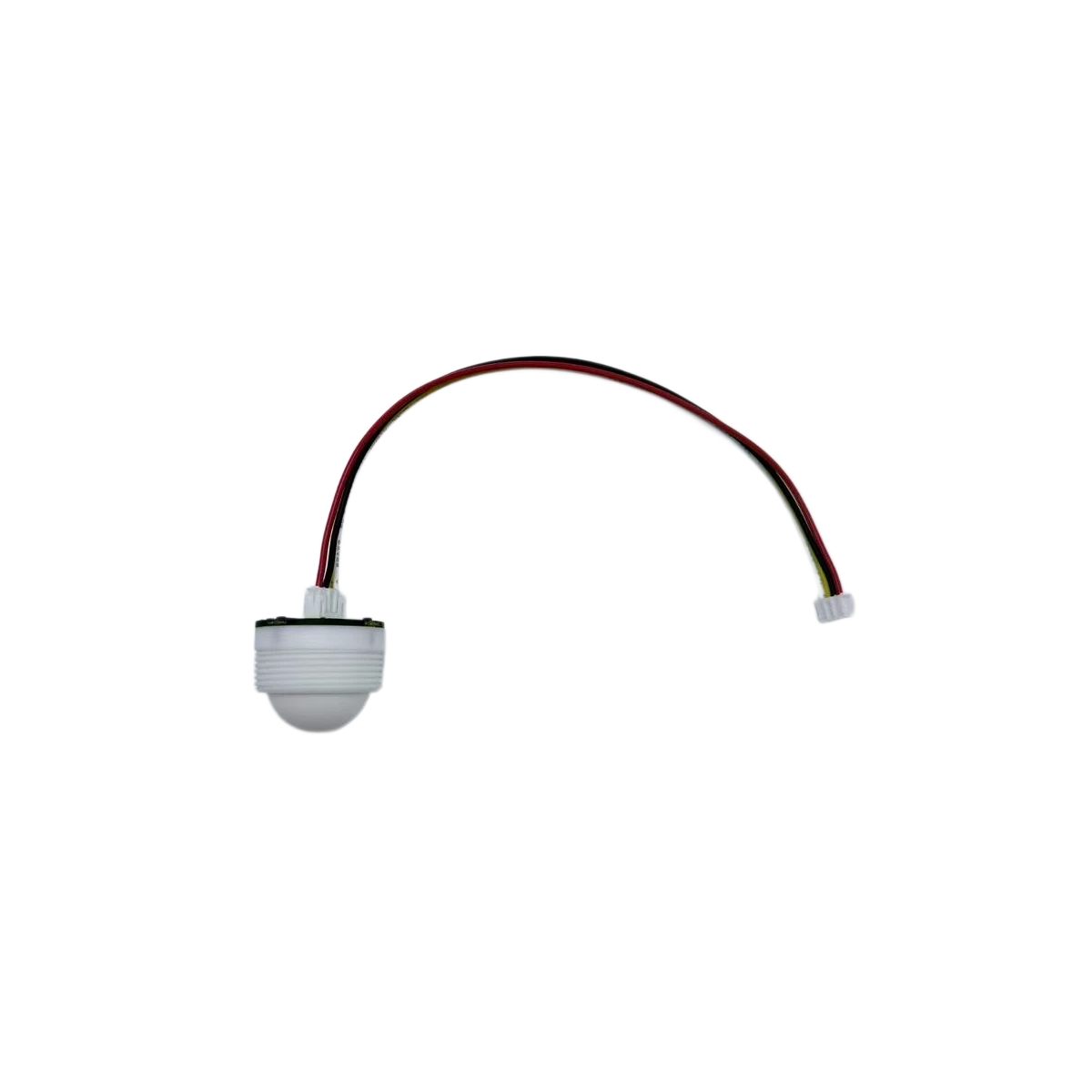
| radar lens antenna/Cable | 【 PTFE】/ 【PH2.0 4P / 0.3m 】 |
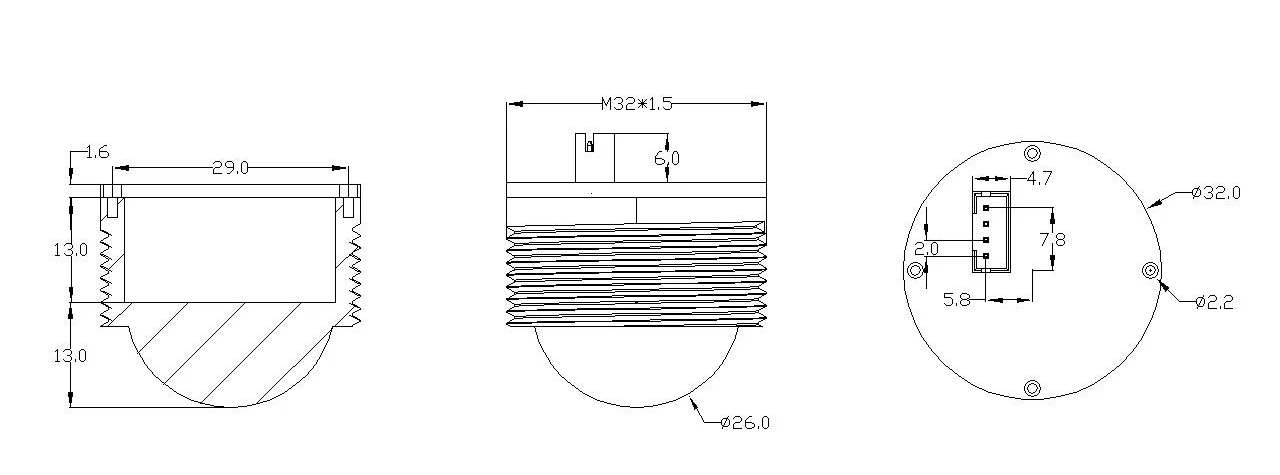
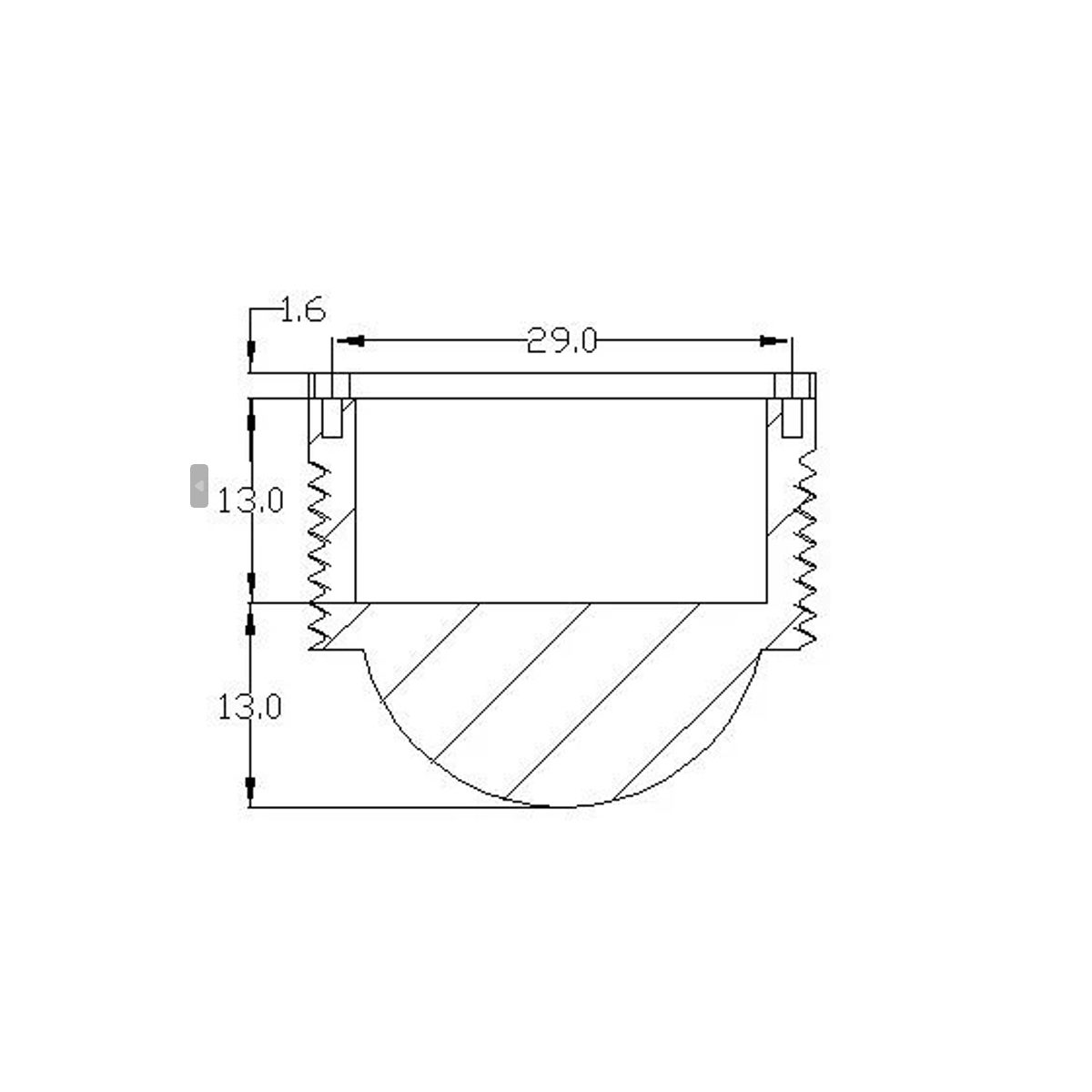
| Connecting Thread | M32*1.5 |
| Communication Protocol | Customizable Modbus / Text Protocol |
| Operating Temperature | -40°C ~ 75°C |
| Debugging Method | Windows Serial Port Debugger |
| Packaging Dims. & Wt. | 50*70*100mm/60g |
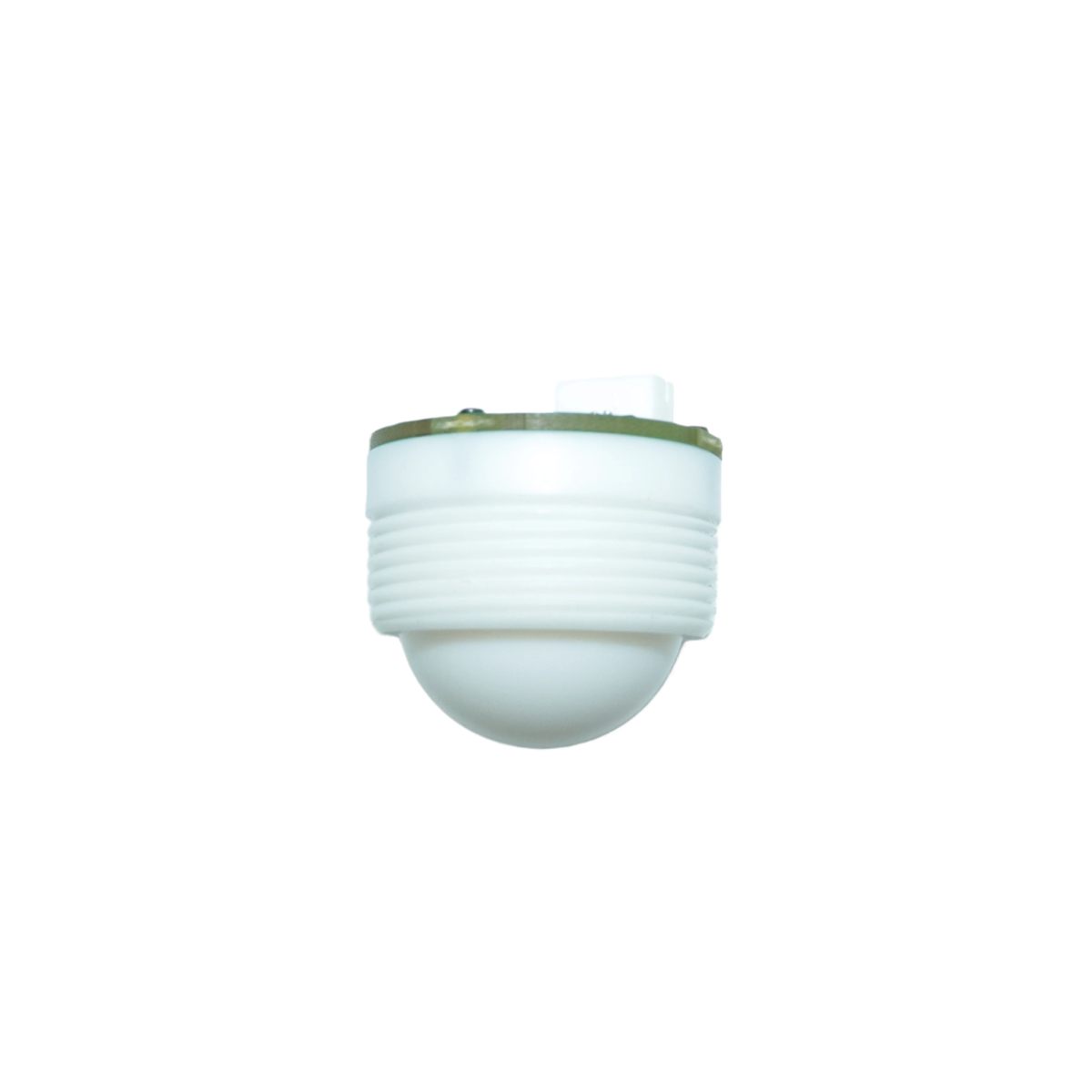
The JJY-YLD138M-32 is a compact 80 GHz radar ranging module built for OEM integration. It screws into a standard M32×1.5 threaded opening — the size of a cable gland — and gives you a complete radar sensor you can build straight into your own product: your housing, your brand, our module inside. It measures from 5 cm to 10 m at ±2 mm accuracy, with a 5 cm blind zone right at the antenna face.
The module is made to disappear into your product. Mount it behind a standard M32×1.5 opening in your own housing, add your bezel or cover, and the finished device ships as your product under your name — we stay in the background as your sensor supplier. Supplied with FORM E for 0% duty into ASEAN; USD 58 (≈¥412) per unit, MOQ 1.
The body is just Ø32 mm across with a Ø26 mm radome and an M32×1.5 mounting thread, so it takes the space of a cable gland rather than an instrument. That makes integration easy in tight enclosures, thin-wall housings and small sensor heads where a full-size radar simply has no room.
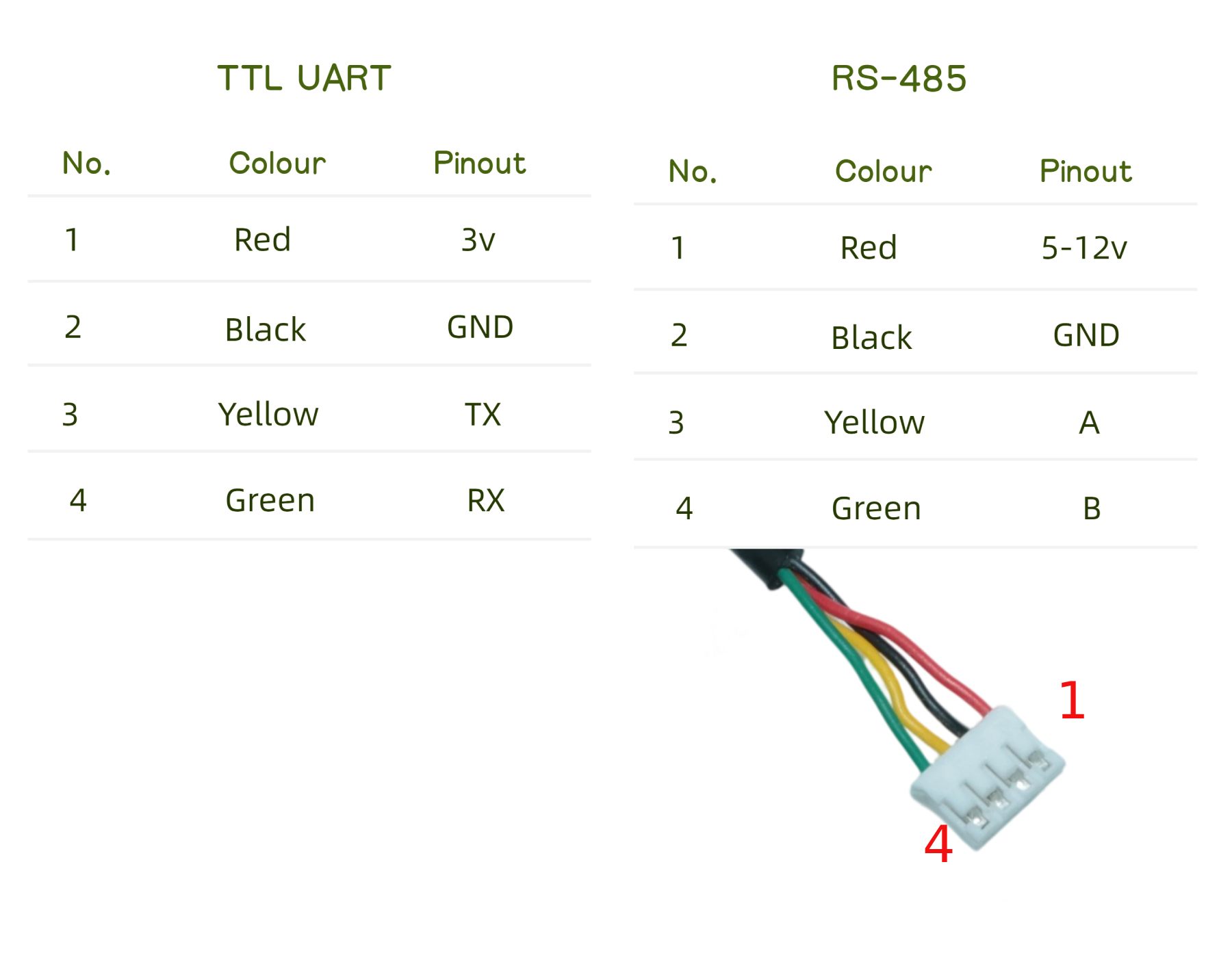
You get the full integration package: dimension drawings, wiring diagrams, protocol documentation and sample code. Your firmware team can have the module talking on RS-485 or TTL UART the same day the samples arrive — no reverse-engineering, no waiting on our engineers.
The module runs a self-developed echo-processing algorithm that filters out reflections from the mounting nozzle, weld seams, agitator blades and condensation on the antenna — the reading stays on the true liquid surface. No blanking curves to compute, no field commissioning software: it works out of the box, which is exactly what an OEM build needs.
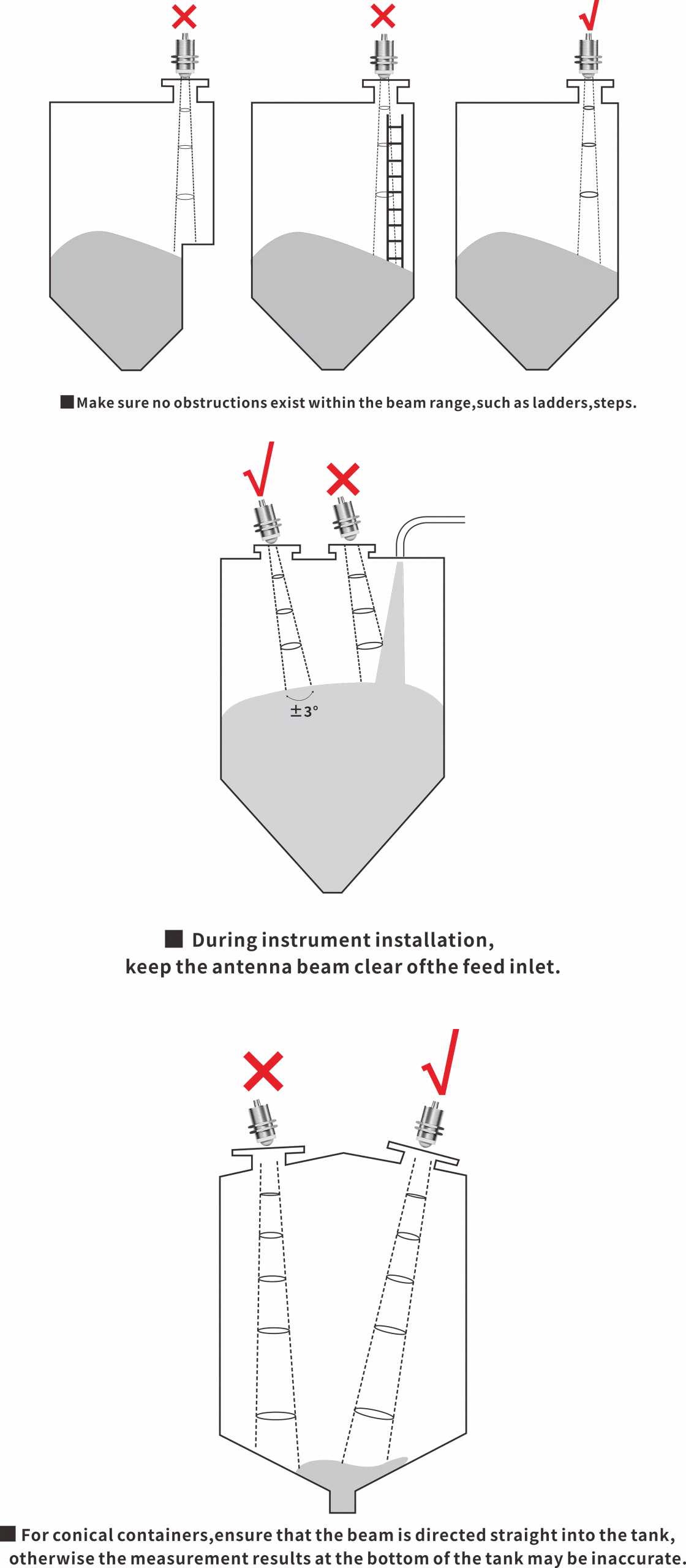
The 80 GHz frequency focuses the beam to just ±2.75°, so the module measures cleanly through narrow nozzles and inside compact OEM housings, and shrugs off wall and stirrer echoes that wider-beam sensors pick up. The small beam also matches the Ø26 mm radome — the antenna is not bigger than the gland hole it mounts in.
The radiating lens is pure PTFE: chemically inert and hydrophobic, so condensation, salt crust or corrosive vapor on the antenna face barely affects the measurement. For OEM products aimed at water treatment, chemical dosing or outdoor enclosures, this is the difference between a sensor that stays calibrated and one that drifts after a season.
The module draws about 6 mA at 2.8–3 V with a 200 ms measurement cycle, so it can run straight off an MCU rail or sit behind a duty-cycled battery — no dedicated power supply stage in your design. That is why it slots into battery-powered loggers and wireless tank nodes without re-engineering the power budget.
Typical integrations: water and wastewater tanks, dosing and day tanks, small closed vessels, pump-station wet wells and battery-powered telemetry nodes — anywhere a product needs a maintenance-free level reading from 5 cm to 10 m at ±2 mm. If your application measures a different liquid or needs a custom range, see the customization options below.
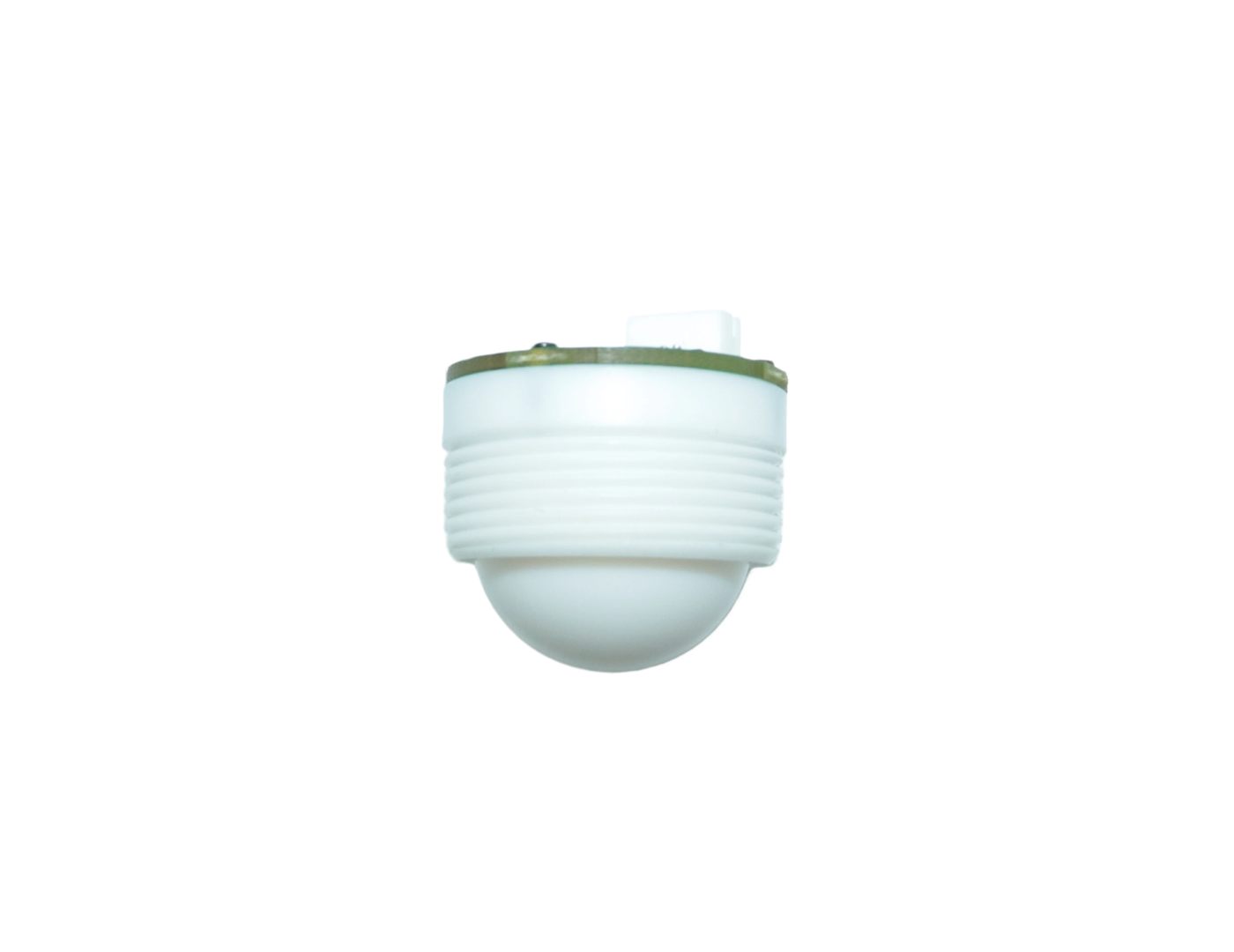
The body is just Ø32 mm across with a Ø26 mm radome and an M32×1.5 mounting thread, so it takes the space of a cable gland rather than an instrument. It screws into a standard M32×1.5 opening in your own housing and disappears into your product.
RS-485 and TTL UART. The TTL UART version talks straight to an MCU at 2.8–3 V, while RS485 runs over a longer cable to a PLC or data logger. Your firmware team integrates it — there is no phone app in the loop.
You get the full integration package: dimension drawings, wiring diagrams, protocol documentation and sample code. Your firmware team can have the module talking on RS-485 or TTL UART the same day the samples arrive — no reverse-engineering, no waiting on our engineers.
Yes. Mount it behind an M32×1.5 opening in your housing, add your bezel or cover, and the finished device ships as your product under your name — we stay in the background as your sensor supplier. Supplied with FORM E for 0% duty into ASEAN; USD 58 (≈¥412) per unit, MOQ 1.
The module measures from 5 cm out to 10 m, with a 5 cm blind zone immediately in front of the antenna — anything closer than 5 cm sits in the blind zone and is not reported.
One unit. There is no minimum order quantity: a single evaluation unit, a 20-unit trial order and a 500-unit batch are all accepted. Quantities under 20 units ship directly from stock; 20–500 units are scheduled into production.
1–20 units: dispatched within 2 working days from stock. 20–500 units: 1–4 weeks for a scheduled production run, depending on the current schedule. Customised versions follow exactly the same schedule — customisation does not extend the lead time.
Measuring range, mounting thread (M32×1.5), output interface (RS485 / TTL UART), protocol and private labelling are all customisable. One free sample is provided — the buyer covers the freight.
ISO 9001:2015 (certificate 02426Q00028R101, valid until 2029-01-15). CE certification is in preparation.
About 6 mA at 2.8–3 V with a 200 ms measurement cycle. It can be powered directly from an MCU rail or a duty-cycled battery supply, which is why it is a common choice for battery-powered level loggers and wireless nodes.
No. False-echo suppression runs in the module’s own firmware: reflections from nozzles, weld seams, agitators and condensation are filtered before the reading is output on RS-485 or TTL UART. There are no blanking curves to upload and no commissioning software in the loop.
Dispatched within 2 working days of payment confirmation.
Depending on the production schedule: 1 week when a run is already planned, up to 4 weeks at peak, followed by calibration, 48 h burn-in and waterproof testing.
Customisation adds no extra lead time.
3D files — STP housing file for your enclosure design.
FORM E zero-duty — China–ASEAN certificate of origin; import duty can drop to zero for Vietnam, Thailand, Indonesia, Malaysia and the Philippines.
Private label — your brand on the housing and the datasheet.
Free sample: one standard unit free of charge, buyer covers freight.
MOQ: 1 unit — single evaluation orders are welcome.
Stock: standard version held in stock for 1–20 units.
Shipping: express air from Shenzhen, or consolidated sea freight for batch orders.
Lead time counts from payment confirmation, working days only.
Looking for the full range? Browse all radar level sensors →
Need full specifications or a custom OEM/ODM quote? Explore our Radar Level Sensor solutions or visit the manufacturer & OEM page.
Every file here is free — no registration, no forms. Files marked Download open straight away; module-specific documents are being updated and will be added shortly.
Mechanical mounting, wiring of the TTL UART and RS485 versions, parameter configuration and the upper-computer software setup.
Frame format and command set for the TTL UART and RS485 versions. A custom text protocol or Modbus register map can be written for OEM projects.
STP solid of the module for enclosure and mounting-boss design. Ask us for the exact model if you need a different boss or thread.
Parameter setup, sampling-interval setting, range calibration, data logging and firmware upgrade from a Windows PC.
Search RadarBLE on Google Play, or install the APK. On-site pairing, output switching, configuration and live readings from your phone.
Search RadarBLE in the App Store. On-site pairing, output switching, configuration and live readings from your iPhone
Full specification table — measuring range, blind zone, accuracy, beam angle, supply, current draw and dimensions on one page.
Coming soon
Pin-out, UART frame examples and MCU reference code for integrating the module directly into your own board.
Need a test report, a calibration certificate or a manual in another language? Call us and tell us what you need:

The 4G radar level gauge gateway collects readings from multiple radar / ultras
More
The JJY-YLD128D-W-32 is a compact FMCW radar level transmitter built for small
More
The JJY-YLB4S-47 is a 4G solar radar level gauge for remote pipes, tanks and op
More
The JJY-YLD158DP is a remote level indicator for radar level gauges. It connect
More
Copyright @ 2026 JiaJia Eye

Scan to add WeChat