Foam Over 3 cm: Why the Radar Reading Disappears Near the Sensor

You are here : Home > Radar & Ultrasonic Level Meter FAQ Hub > Radar Level Sensor Field Cases: Real Sites, Real Fixes > Foam Over 3 cm: Why the Radar Reading Disappears Near the Sensor
Application: liquid level under a foam layer
Device: JJY-YLD128D-W-32 radar level transmitter
Mounting height: 0.8 m
Foam layer on site: 10–15 cm
Symptom: “insufficient echo energy”, no reading within 20–30 cm of the antenna
Recorded: 14 November 2026

The problem

Site & symptom

Mounting height 0.8 m. The unit reported insufficient echo energy, and once the liquid came within 20–30 cm of the probe the reading simply disappeared – no number at all, not a wrong number.

Site discussion confirmed 10–15 cm of foam on the surface.

Root cause

Foam. A 3 cm layer is the practical limit for this measurement: beyond that the radar energy is absorbed and scattered in the foam instead of being reflected back from a surface, and the return falls below what the unit can use.

With 10–15 cm of foam the beam is not reaching the liquid at all – whatever comes back is coming from the foam, and as the level rises into the last 20–30 cm the return drops under the threshold and the output disappears.

This is a property of the process, not a fault in the unit. There is no parameter that makes radar see through 15 cm of foam.
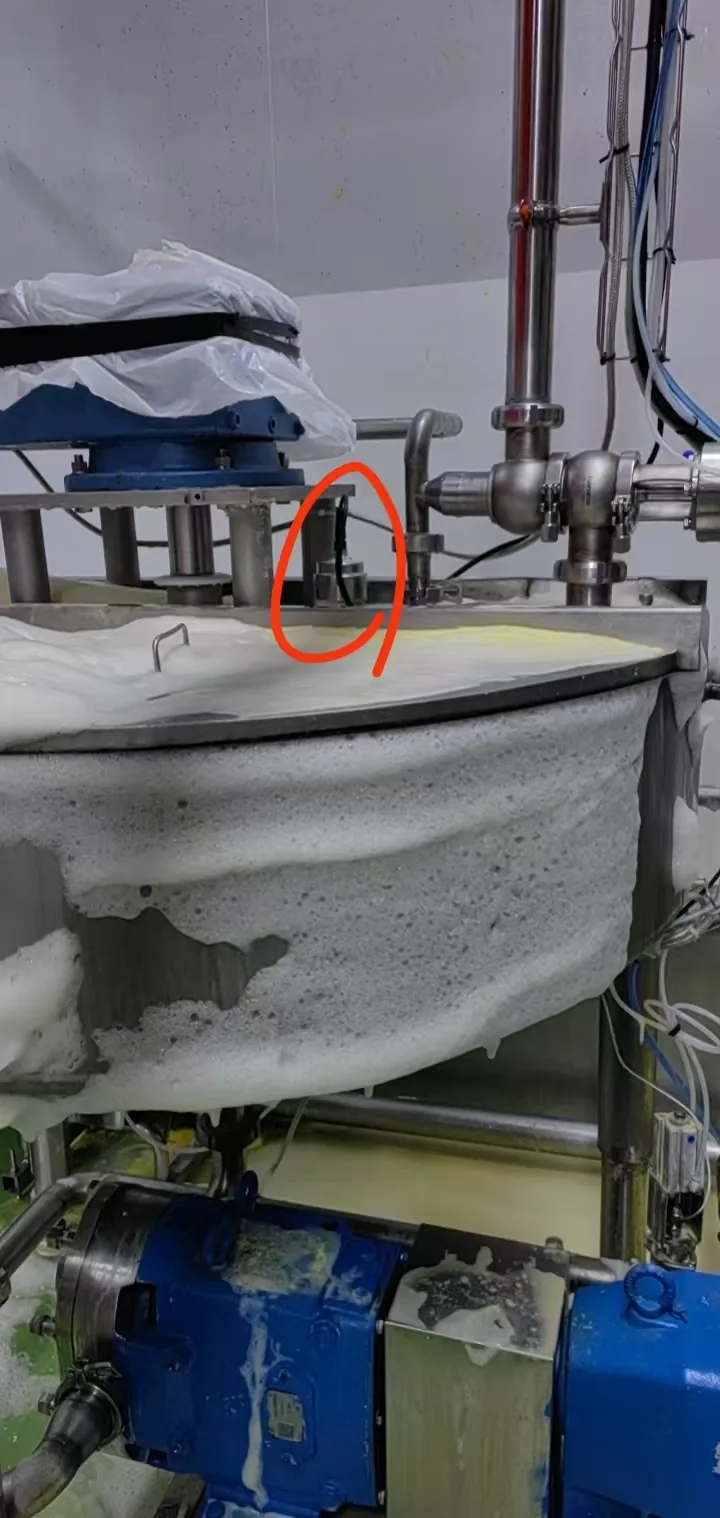
The installation

Tank surface covered with a thick layer of foam, radar sensor circled in red above it
Field case – sensor circled, and the surface below it is foam, not liquid. The layer is thick enough to hide the liquid from the radar completely.

What we told the customer

Outcome

Not solvable by tuning. We told the customer plainly that with foam above 3 cm the radar cannot measure through it, and recommended either measuring at a point that avoids the foam or accepting the gaps and reading the level once the foam clears.

No replacement unit was sold for this site. A different radar would behave the same way at this wavelength, and saying so was more useful than shipping hardware that would fail the same test.

Result

The customer stopped chasing a device fault. The measurement gap is now understood as a process condition, and the level is read when the foam has subsided.
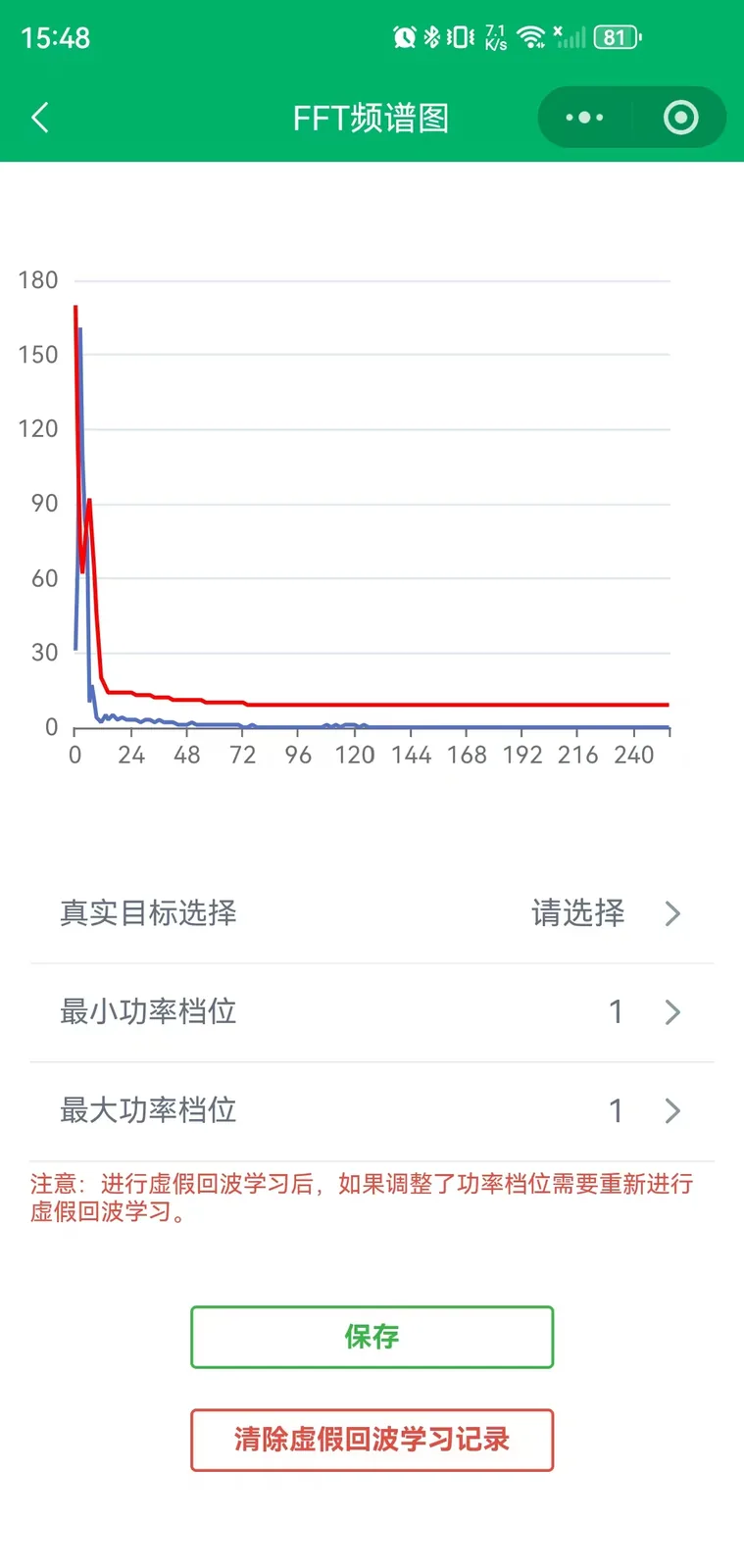
Echo spectrum with foam present

FFT spectrum with the surface return suppressed by foam
Capture with the foam in place – the return is there but suppressed, which is exactly what “insufficient echo energy” looks like on a trace.

What this case teaches

  • 3 cm of foam is the practical limit, not a conservative guess. Above it the return comes from the foam, and the number you get is a foam level, not a liquid level.
  • Foam is a process condition. No parameter fixes it. Gain, thresholds and echo learning all operate on a return that is not coming back.
  • A disappearing reading near the top is often foam, not blind zone. Both produce “no value”, but foam also produces “insufficient echo energy” while the surface is still well outside the blind zone.
  • Saying “this cannot be measured” is a valid answer. It saves the customer a return, a re-installation and a second failed unit.

Foam, steam or heavy vapour between the sensor and the surface? Tell us the layer thickness and what the level does when it appears – we will tell you honestly whether radar can measure it or whether the point of measurement has to change.

Talk to an application engineer

Copyright @ 2026 JiaJia Eye

Weixin
No:89470
WhatsApp Inquiry Email WeChat
× WeChat QR code

Scan to add WeChat