
A radar level transmitter on a funnel-shaped discharge box handling ash. The unit reported an empty distance that did not match the box, and the customer reported it as simply wrong rather than unstable.
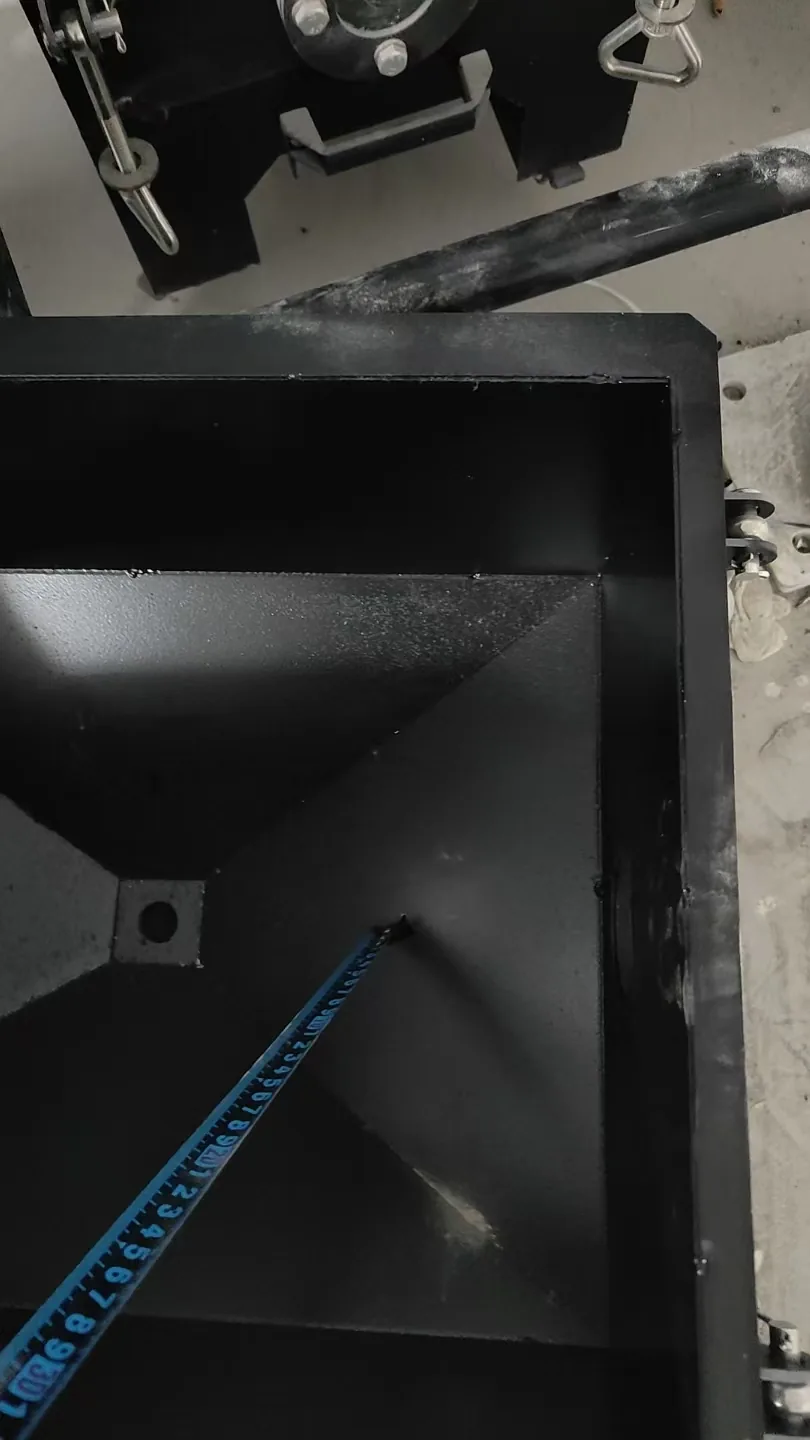
The box is not deep: 30 cm at the deepest point, 18 cm at the shallowest. That 12 cm difference is the whole story.
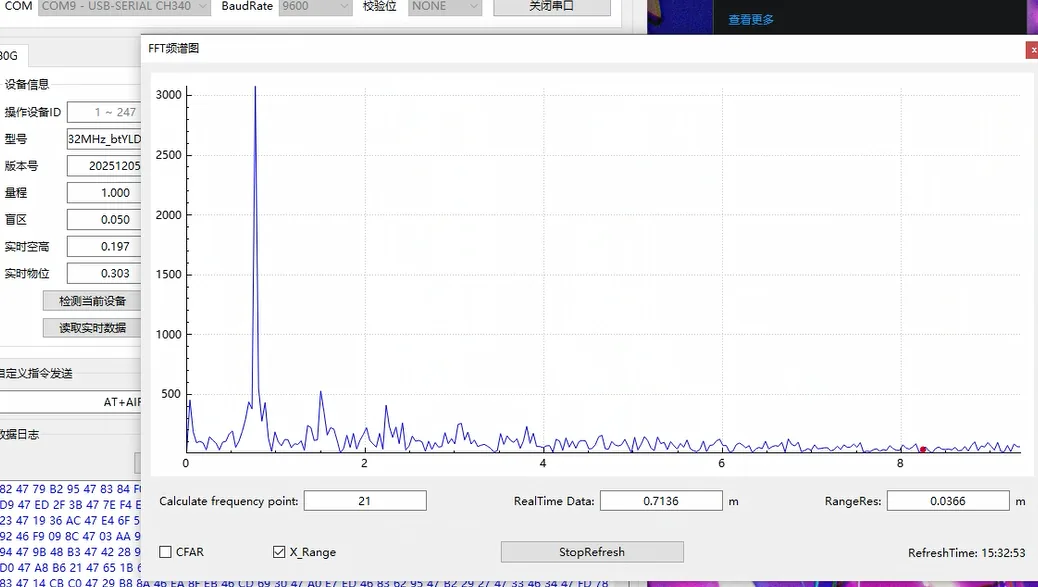
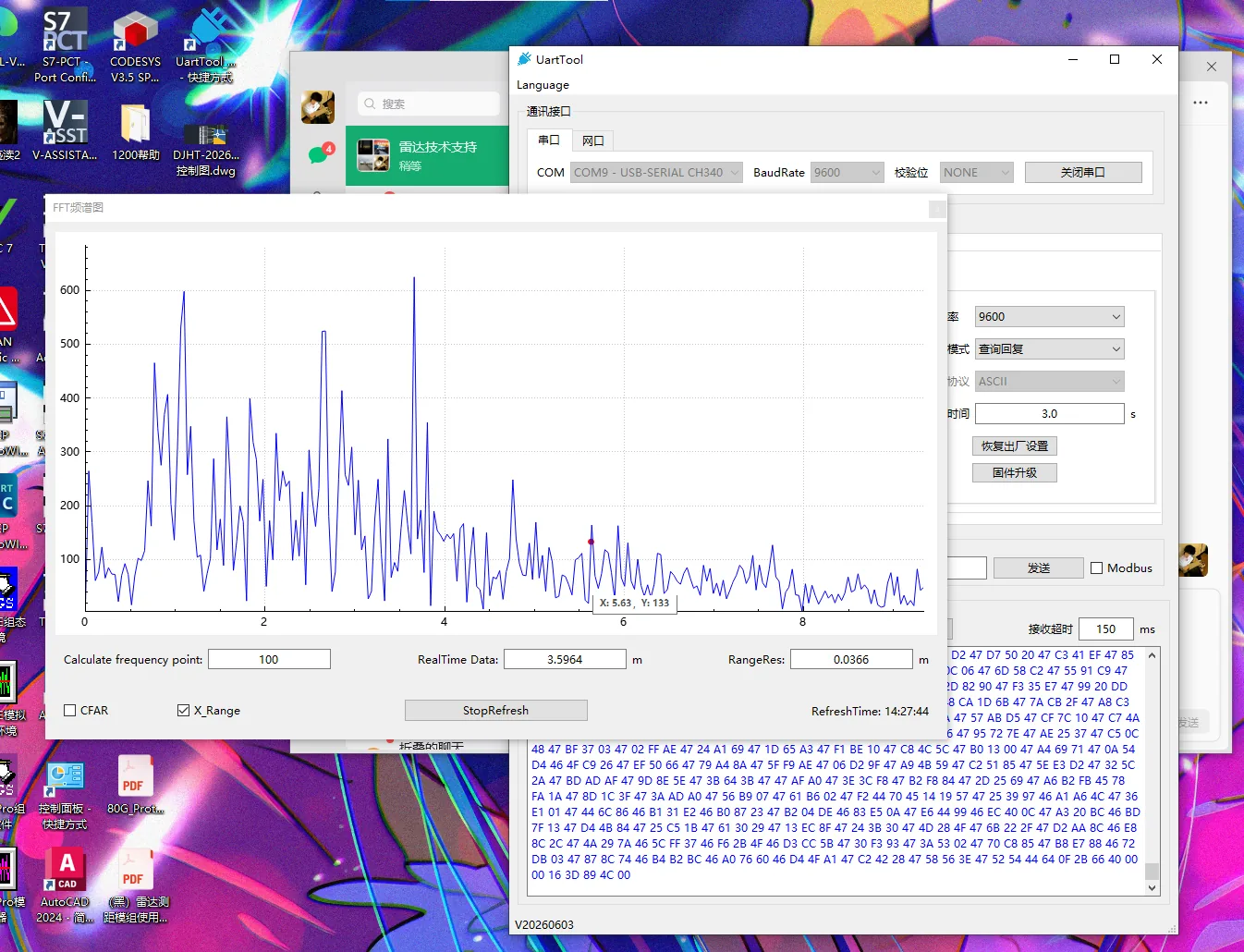
The spectrum was very messy. The probe is aimed at a slope, because a funnel has no flat bottom – the deepest point is a cone apex and the walls rise away from it.
With the box empty, the beam has nothing but those sloped walls to return from. A slope scatters the return instead of reflecting it back, and the remaining energy bounces between the walls: multipath. Every reflection arrives from a different distance, which is why the trace fills with peaks and the reported empty distance has no single meaning.
This is a measuring condition, not a device fault. The same geometry exists in every conical hopper and funnel.
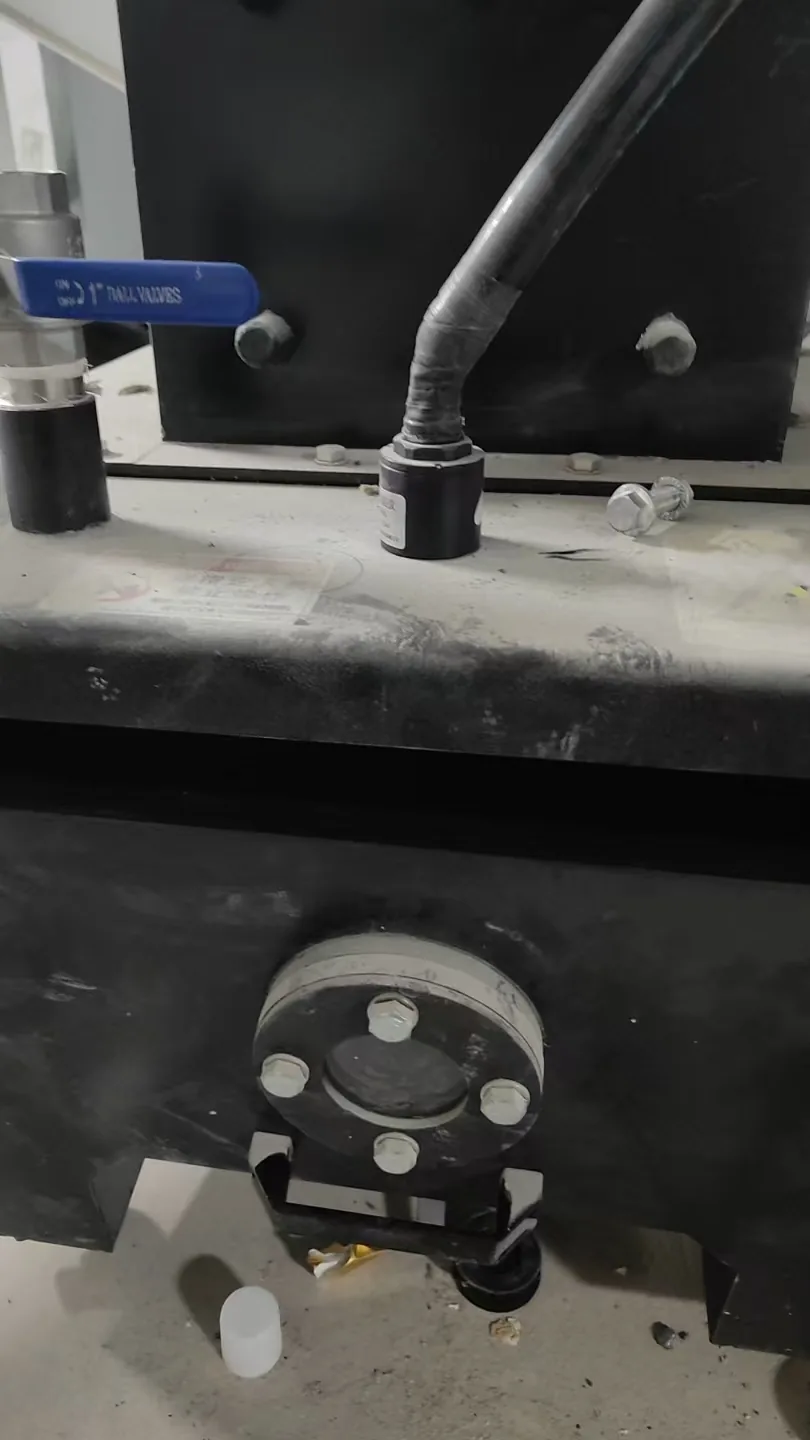
No parameter change makes an empty funnel behave like a flat surface, and we did not pretend otherwise. The customer was asked to add material and re-check.
With material in the box the reading was normal. The unit was measuring the material surface, which is the surface it is installed to measure.
Correct readings in the working condition. The empty-box reading is not a valid acceptance test on this geometry – it measures a cone, not a level.
Measuring a conical hopper, funnel or discharge box where the empty reading is meaningless? Send us the box depth, the cone angle and a spectrum with material present – we will tell you what the geometry can and cannot deliver.

Copyright @ 2026 JiaJia Eye

Scan to add WeChat