Reading Pins at 1500 mm at Night: A 0.3 m Blind Zone Left On

You are here : Home > Radar & Ultrasonic Level Meter FAQ Hub > Radar Level Sensor Field Cases: Real Sites, Real Fixes > Reading Pins at 1500 mm at Night: A 0.3 m Blind Zone Left On
Application: level that rises close to the antenna
Device: 80 GHz flanged radar level transmitter (DN80)
Mounting height: 1500 mm
Symptom: reading stops at 1500 mm once the level reaches about 1250 mm
Recorded: 14 November 2026

The problem

Site & symptom

Mounting height 1500 mm. Once the real level rose to about 1250 mm, the unit stopped following it and reported 1500 mm – the full installation height, as if the tank were empty.

It only happened at night, when the level moved. During the day the reading was normal, which is why it survived so long before being reported.

Root cause

The application parameters were the cause, not the measurement. Two settings had been left in a state that no longer matched the installation:

• Suspended installation mode was switched on.
• The blind zone was set to 0.3 m.

A 0.3 m blind zone means the top 300 mm under the antenna is not measured. On a 1500 mm installation, a level of 1250 mm leaves an empty distance of 250 mm – inside that blind band. The surface is no longer an accepted target, so the output falls back to the installation height: 1500 mm.

That also explains the timing. At night the level rose far enough to enter the band; during the day it stayed below 1250 mm and remained measurable.
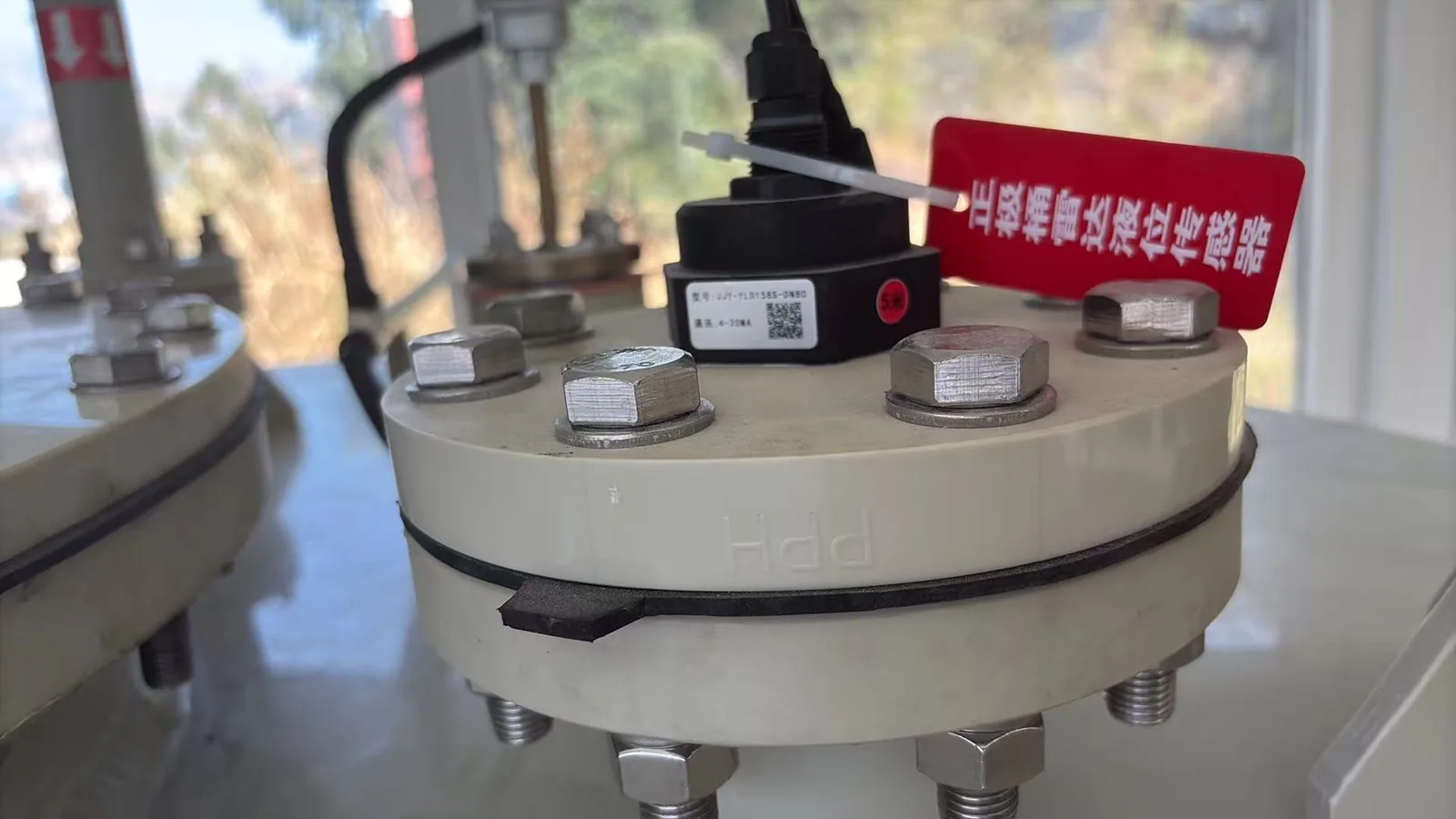
The installation

80 GHz flanged radar level transmitter mounted on a DN80 nozzle
Field case – the 80 GHz flanged transmitter on its DN80 nozzle. The nozzle is what makes the top of the range tight: the surface can come very close to the antenna.

How we fixed it

Solution

Read the live parameter set over Bluetooth and changed two values:

• Suspended installation → conventional installation.
• Blind zone 0.3 m → 0.05 m.

The 0.05 m figure is the smallest blind zone the unit supports, and it is the right one here: the liquid in this tank rises to the underside of the probe, so the installation has to be able to measure almost all the way up. Leaving it at 0.3 m guaranteed that every high level would be discarded.

Result

The unit followed the level through the full range, including the night-time rise that used to pin it at 1500 mm.
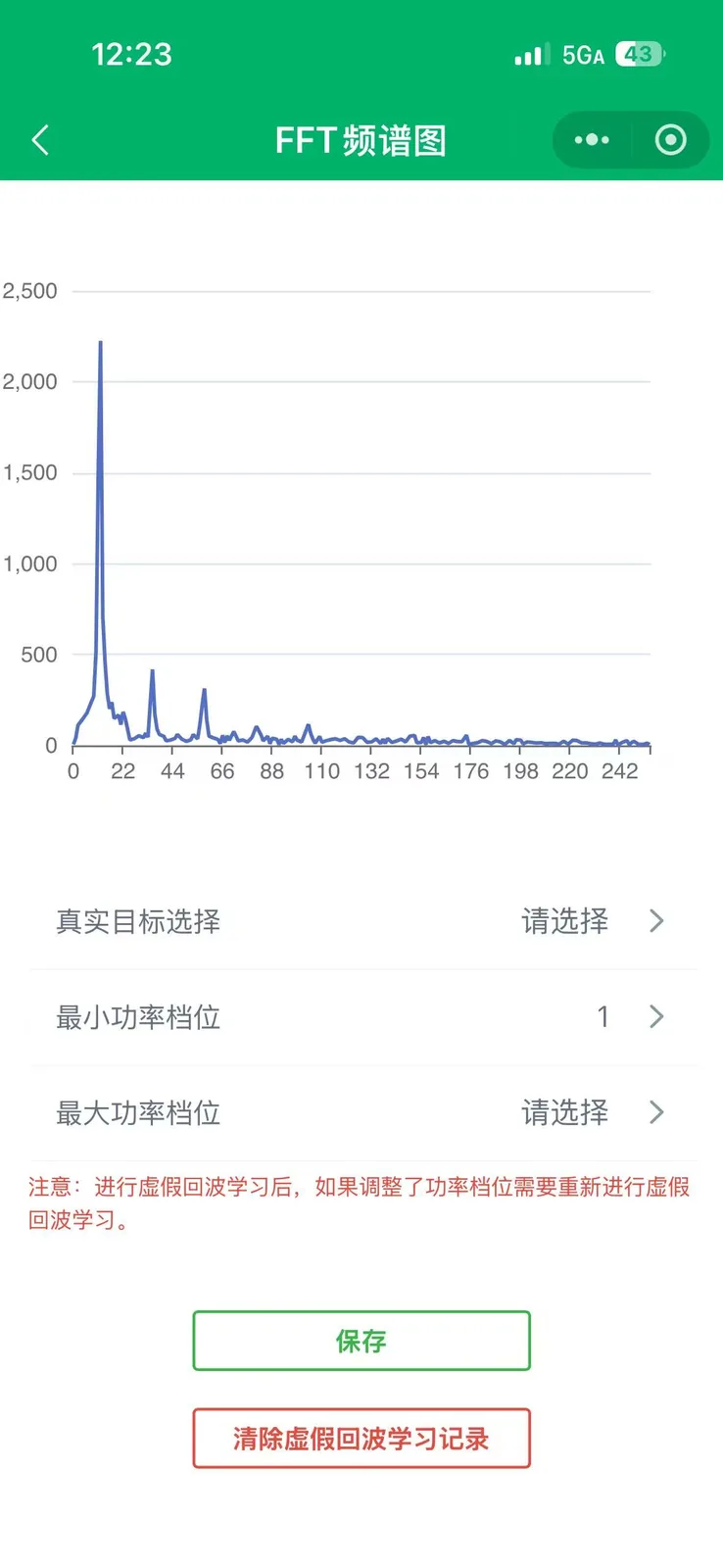
Echo spectrum from the visit

Phone screenshot of the FFT spectrum with the application parameters below it
Field capture – a single clean peak. There was never anything wrong with the echo; the unit was simply refusing to measure the top 300 mm of its own range.

What this case teaches

  • A blind zone is a measurement exclusion, not a safety margin. Everything inside it is invisible. If the process fills to the antenna, the blind zone must be at its minimum, not at a comfortable default.
  • Calculate the blind zone against the highest level, not the lowest. 1500 mm installation minus 1250 mm highest level leaves 250 mm – so anything above 0.25 m is unusable here.
  • Suspended mode is for a reason that has to be true on site. It is there for tanks with a recessed or obstructed nozzle. Left on where the surface comes up to the probe, it costs you the top of the range.
  • “Only at night” is a clue about level, not about temperature. A fault that appears only when the process moves is usually a range limit being crossed.

Tank that reads full scale when it is actually nearly full? Send us the mounting height, the highest working level and your current blind-zone setting – that is usually enough to confirm it in one reply.

Talk to an application engineer

Copyright @ 2026 JiaJia Eye

Weixin
No:89470
WhatsApp Inquiry Email WeChat
× WeChat QR code

Scan to add WeChat