
The transmitter was installed above an open river channel. The empty distance from the antenna to the water surface was well over 10 m, but the unit never reported more than 2 m. The value was steady, not noisy – which is why the customer first suspected the device itself.
Two tests settled it before we touched a single parameter.
First, the customer held a reflector plate at a known distance in front of the antenna, and the unit read it correctly. That proves the transmit-and-receive chain works at short range – it says nothing about the target 10 m away. The fault had to be downstream of the antenna.
Second, the obstructions in front of the antenna were removed. The reading stayed at 2 m. That ruled out a blocked antenna and pointed at what the beam was actually landing on: a stone slope directly below and to the side of the mounting point, not the water.
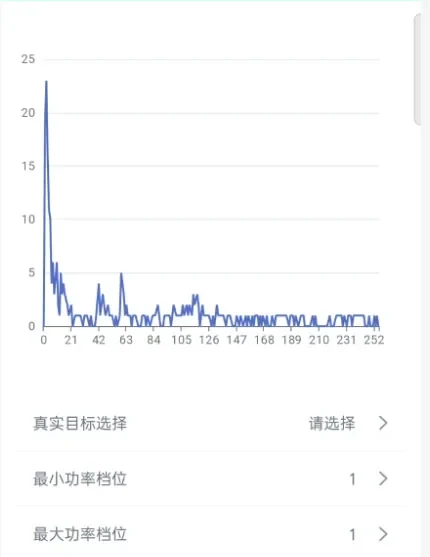
With the RF gain still at its lowest step, that strong slope return was the only echo the unit could resolve, so it locked onto it and reported a fixed near value.
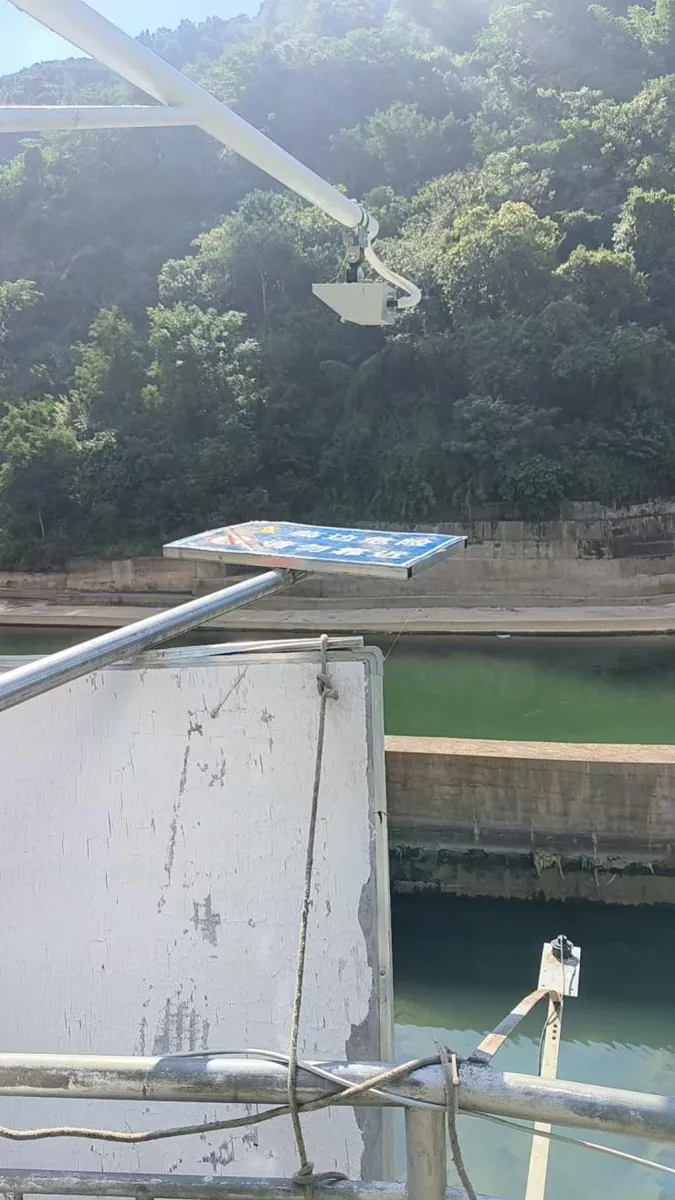
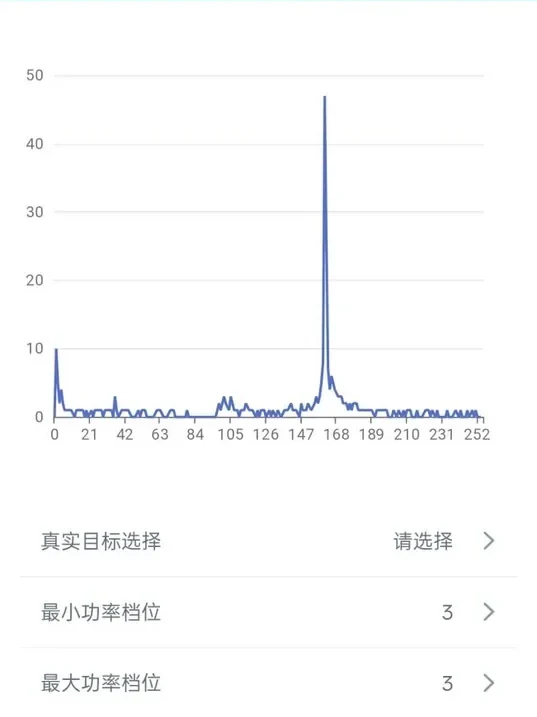
Four changes, in this order: (1) raised the RF gain from step 1 to step 3, because at step 1 the water return sat below the detection threshold and only the slope echo survived; (2) verified the aim with a plumb line – the weighted line landed on the slope, confirming the beam was not over open water; (3) moved the transmitter outward, away from the bank, until the beam footprint fell on the water surface; (4) ran real-target learning so the unit stored the actual water return as the target echo.
Gain alone was not enough. After step 1 the unit read further, but the value kept jumping – the aim was still wrong. The reading only became stable once the transmitter was repositioned.
After repositioning, the unit detected a clean waveform and reported a level that tracked the real water surface.
Measuring level over a river, channel or reservoir? Send us the empty distance, the mounting height and a photo of the bank – we will tell you where the beam will land.

Copyright @ 2026 JiaJia Eye

Scan to add WeChat