
The transmitter was mounted on top of a carbon steel tank measuring diesel. The empty distance from antenna to oil surface was about 6 m. The unit reported 0.15 m – a value close to the antenna, not to the product.
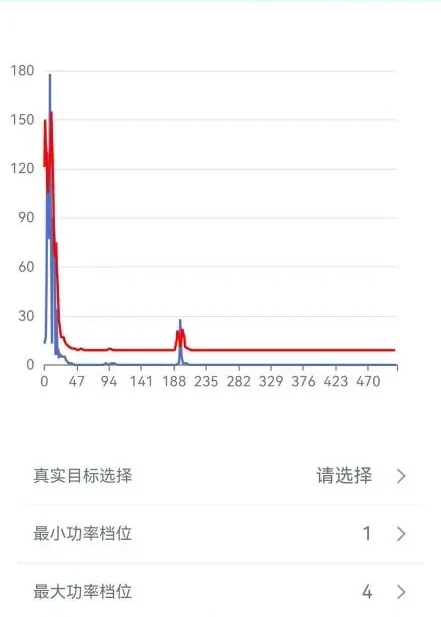
A near-zero reading on a 6 m tank is almost never an aim problem. It is a detection threshold problem, and the Bluetooth diagnostic page showed it directly: the antenna echo threshold was 200 and the actual echo amplitude was about 180.
The real diesel return was sitting just below the threshold. The unit therefore discarded the only echo it should have used and fell back on whatever near-range reflection was left – the tank roof, the nozzle, or the antenna’s own coupling – and reported that as the level.
The flush-style mounting made it worse: with the antenna recessed in the nozzle, part of the transmit energy was spent on the mounting itself rather than on the product 6 m below.
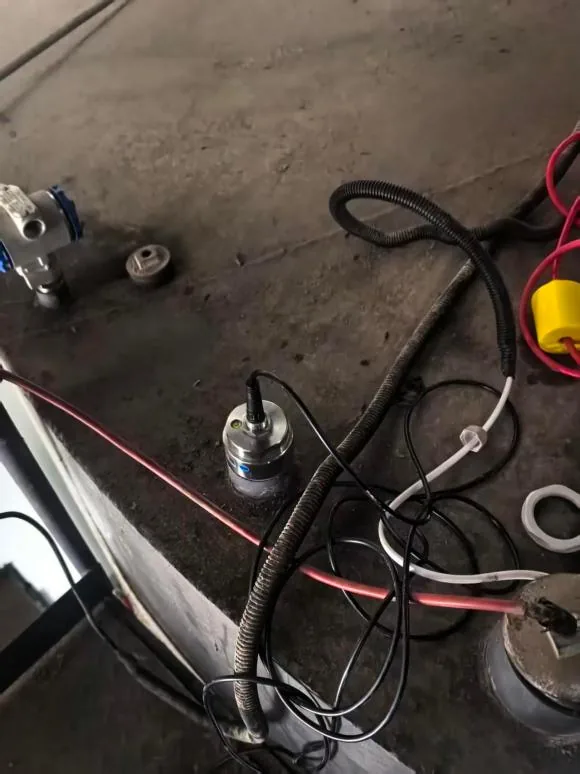
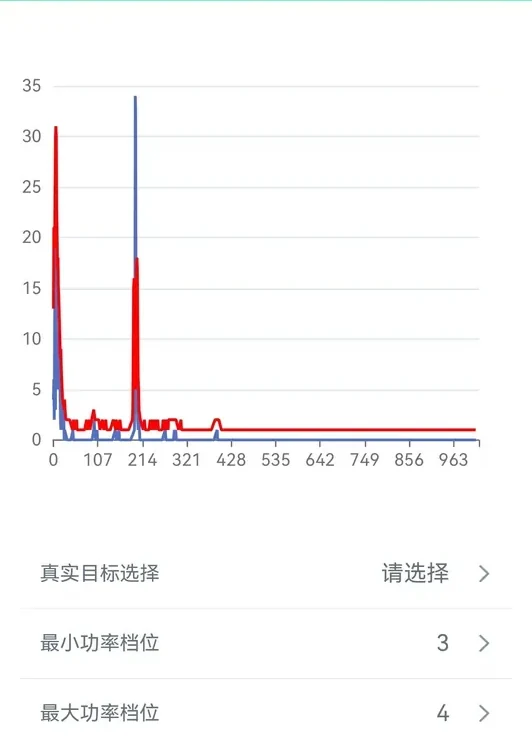
Three changes: (1) switched to suspended installation, so the antenna projects clear of the nozzle instead of sitting inside it; (2) increased the blind zone to 0.2 m to ignore everything immediately in front of the antenna; (3) raised the RF power by three steps so the diesel return cleared the 200 threshold with margin.
After the mounting change the unit produced a level again, but the true echo was still marginal – which is why the power step was needed as well. Mounting alone moved the reading off 0.15 m; the gain change is what made it reliable.
The unit detected a correct waveform and reported an accurate diesel level across the full 6 m range.
Steel tanks with low-reflectivity product are where threshold problems hide. Give us the tank height, the nozzle detail and the product, and we will size the antenna and blind zone before the unit ships.

Copyright @ 2026 JiaJia Eye

Scan to add WeChat